NewsMindzy events
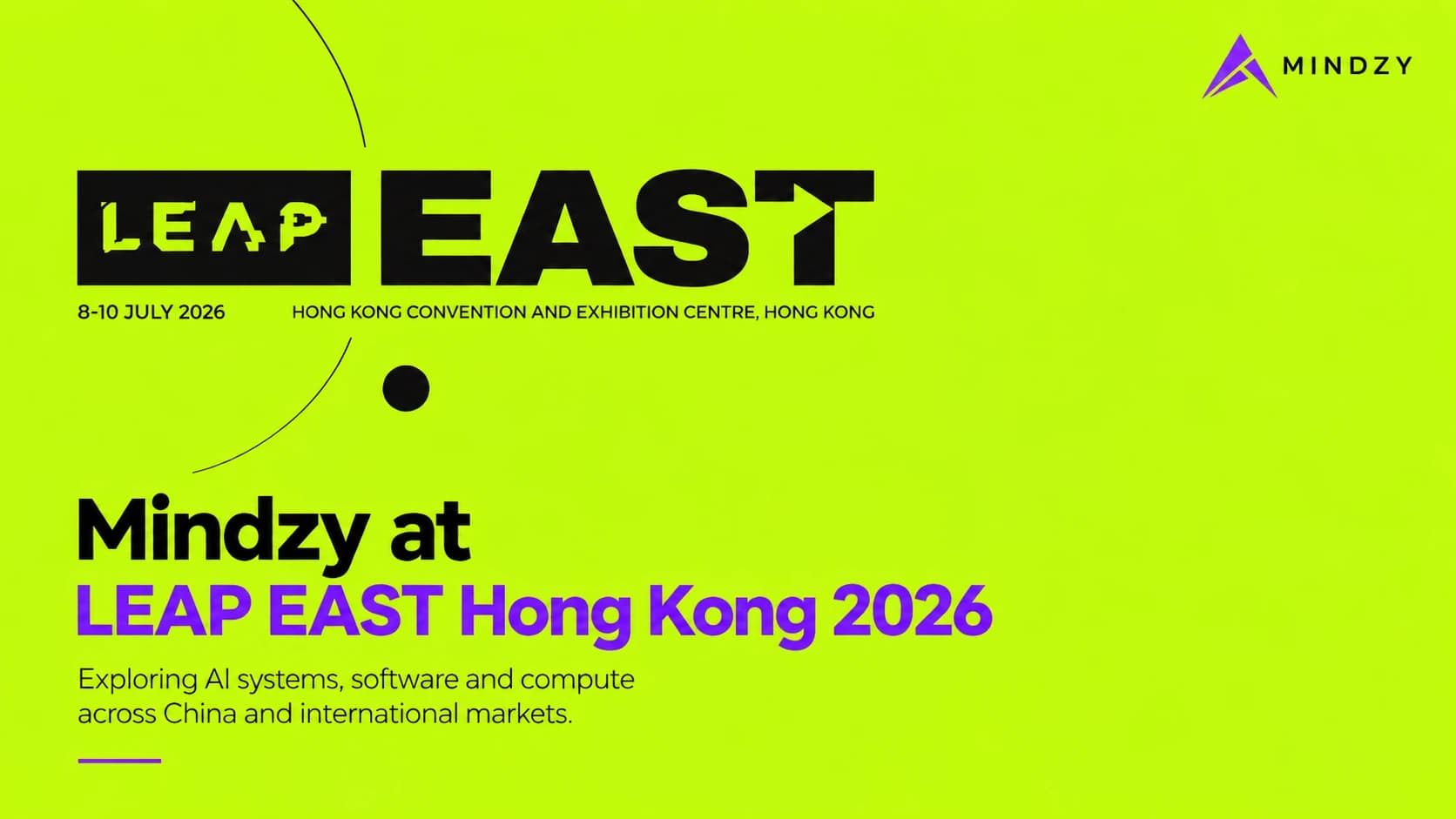
Mindzy at LEAP East Hong Kong 2026
LEAP East made the accelerating technology relationship between Saudi Arabia, Asia and China visible across AI, compute, infrastructure and investment.
Ideas, research and practical knowledge from Mindzy.
LEAP East made the accelerating technology relationship between Saudi Arabia, Asia and China visible across AI, compute, infrastructure and investment.
Mindzy will be present in Guangzhou to work at the intersection of technology localization in China and international expansion for Chinese companies.
02
Original analysis connecting executive questions, evidence and system architecture.
Artificial intelligence is spreading across the economy faster than the insurance industry can fully measure its risks. What happens when businesses adopt a technology before insurers can reliably price its potential losses?
Artificial intelligence can write, explain, calculate, summarize, and solve problems in seconds. But as we delegate more mental work to machines, what happens to our ability to think independently?
Chatbots answer questions. AI agents can plan, use tools and take actions. That distinction is pushing artificial intelligence from conversation into actual work.
The U.S. executive branch now uses “Super Intelligence” in place of “Artificial Intelligence.” The complication is that superintelligence already had a very different meaning in AI research.
AI can now handle parts of a sales conversation inside messaging apps. But automating a conversation is not the same as creating revenue.
The competition is about far more than chatbots. Models, semiconductors, electricity, data centers, industrial deployment, talent and standards have all become strategic assets.
China’s plan is not simply to build a Chinese ChatGPT. Its official strategy reaches from frontier models and computing clusters to factories, robots, public services and everyday products.
Enterprise AI pilots rarely fail because the model is incapable. They fail because the system around the model is incomplete.
Today’s most credible AI risks are less cinematic than science fiction — and in many cases much more immediate.
Humans still control the infrastructure around today’s AI systems. What we do not have is perfect control over every output or every path an autonomous agent may take.
Do not begin with a model. Begin with a workflow, a measurable problem and a clear definition of what humans should still control.
Every AI answer ultimately comes from physical machines somewhere. A data center is the industrial facility that keeps those machines powered, connected and cool.
Not every employee needs a dedicated AI Employee. The right architecture starts with the work, then defines the role, context, tools and authority.
Owning AI infrastructure can improve control, privacy and cost predictability. It can also lock a company into expensive hardware it does not fully use.
An AI agent is a technical pattern. An AI Employee is an operational role with identity, context, tools, permissions and accountability.
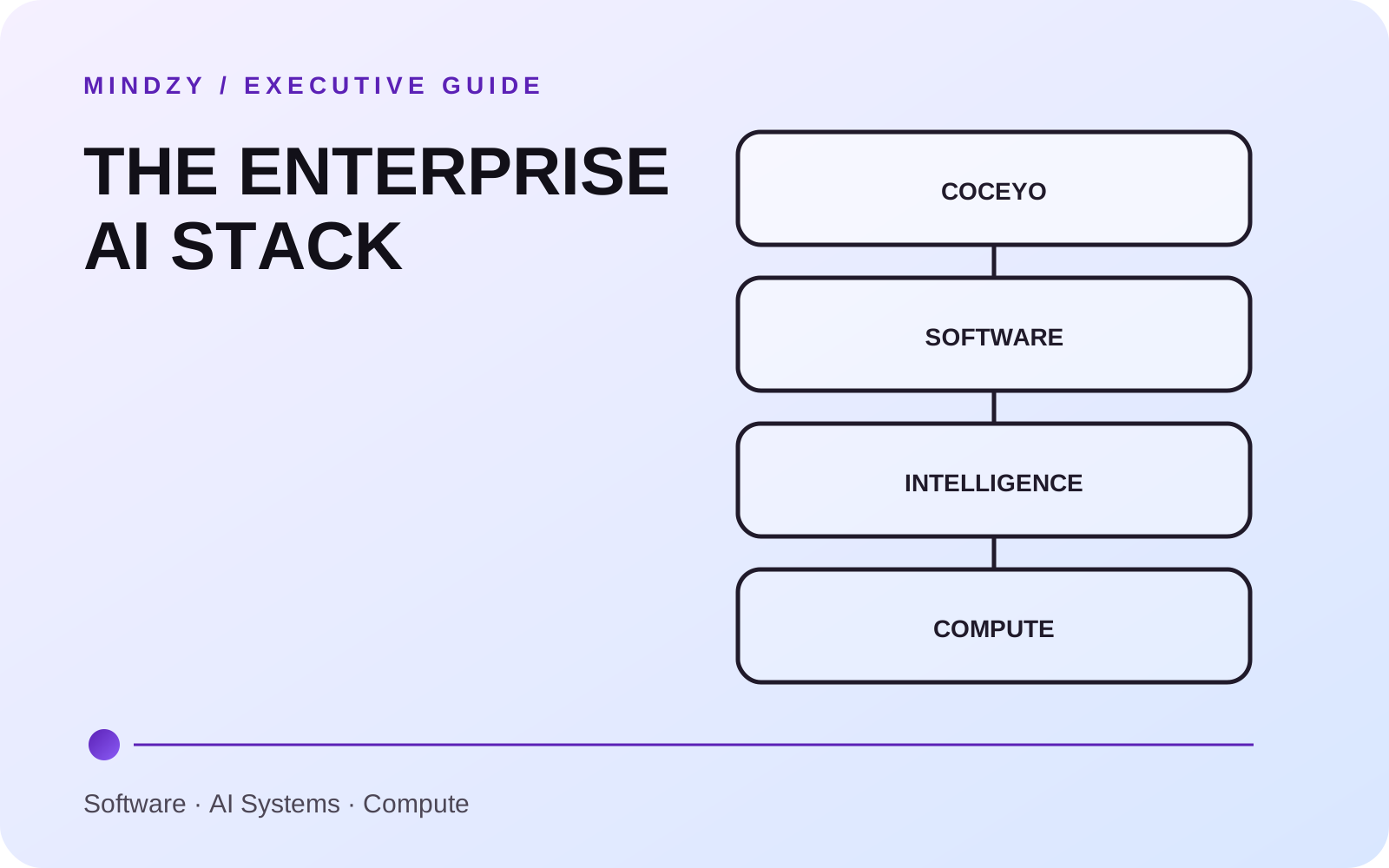
Enterprise AI is not just a model-selection problem. It is a systems architecture that connects interface, software, intelligence, controls and compute.
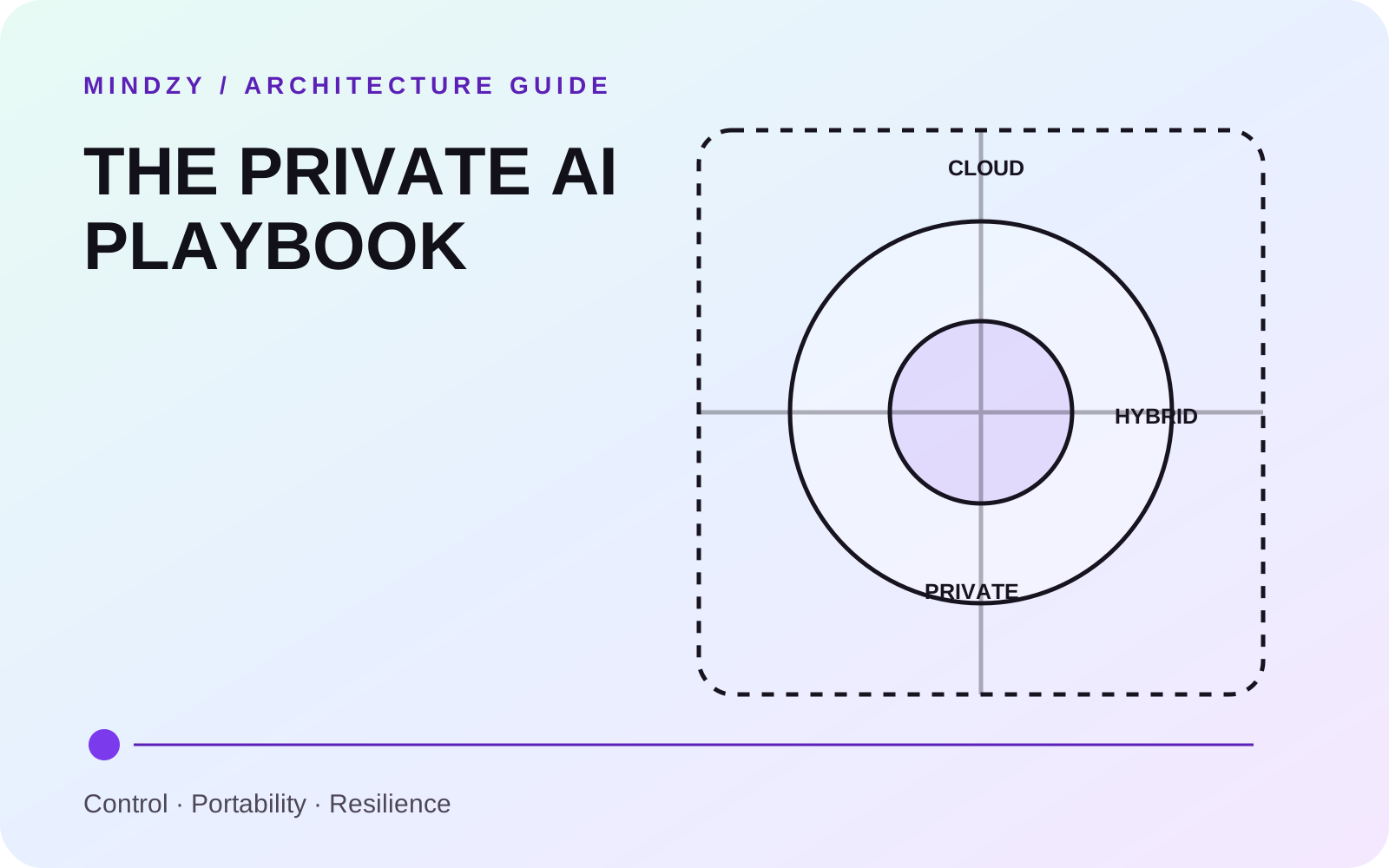
Cloud and private AI are different operating models. The right decision depends on workload, trust boundary, utilization and organizational capability.
On-premise AI makes sense when greater infrastructure control solves a real workload requirement—not merely because owning a GPU server sounds private.
RAG can make AI responses more relevant. It does not automatically determine who is allowed to see the information being retrieved.
An enterprise AI agent needs enough autonomy to remove unnecessary work—but never more authority than the organization can safely supervise.
Human approval is not evidence that an AI system failed to become autonomous. In many enterprise workflows, it is what makes useful autonomy possible.
AI can understand what should happen without being able to make it happen. Operational software closes the gap between recommendation and controlled action.
Buy commodity functionality. Build the differentiated layer. The real decision is often buy, extend or build—not one extreme or the other.
A real enterprise AI deployment is a controlled system in which people, software, data, models, tools, permissions and infrastructure work around one process.
The bottleneck for AI inside companies has shifted from model quality to operating layer. A practical look at what an infrastructure actually contains — and what it does not.
Why progressive rollout still wins, how to choose the first department, and what to put behind a human gate before anything goes live.
Most production AI failures are not model failures. They are governance failures. A field guide to validation rules, approval flows, and audit boundaries.
AI infrastructure does not require rebuilding the business. It requires designing the operating layer around how the business already runs.
A day in the life. Our team no longer writes code line by line — they review, validate, and supervise specialized agents. Here is what that looks like in practice.
A custom Mindzy dashboard is not a reporting page. It mirrors the company's decision structure — leadership, managers, teams, validation.
A decision framework for leaders who need to connect business workflows, software, models, governance and infrastructure without creating a fragile collection of pilots.
A practical architecture and governance playbook for leaders deciding where models, data and AI workloads should run.
Everything you need to map your organization's exposure to the 2026 EU AI Act: risk pyramid, concrete use cases, 38-point compliance checklist, 2026-2027 calendar and ready-to-use document templates.
04 / Mindzy
A concise briefing on AI systems, enterprise technology and the signals that matter.
For executives, technology leaders and operators.